
Autumn is a beautiful season of trees shedding leaves. Some of those leaves are so pretty, it’s amazing the trees have dropped them. You’d think they would want to keep them on display till the end of the season. The red leaves are my favorites. I don’t see them often, and I think they’re remarkable.
Just as trees let go of beautiful leaves, writers can let go of beautifully written sections of their book if those sections don’t serve the overall story. It’s part of the self-editing process that comes after writing your first draft. This process may include the difficult decision to remove some of your carefully crafted paragraphs if they no longer serve the focus of your book. And possibly replace them with something new.
It’s not easy to cut out words, paragraphs, sections of your manuscript. You’ve worked so hard writing those pieces. How can you let them go? But if it turns out those paragraphs are not what the reader needs most, letting go of those words is the right thing to do.
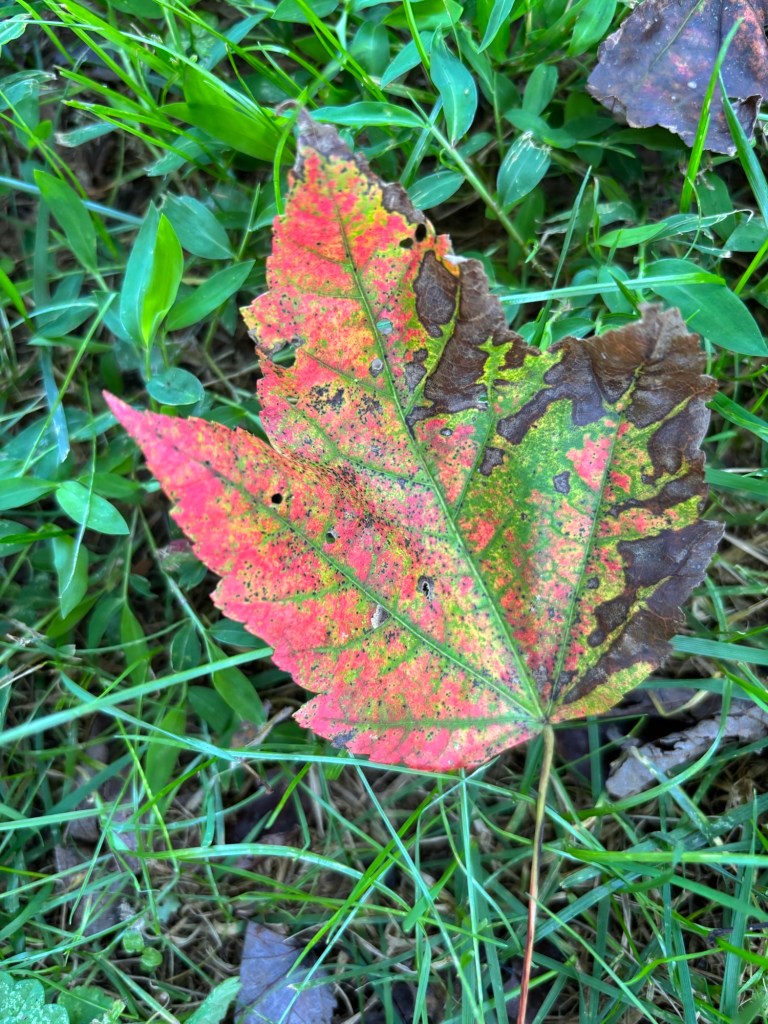
When you let go of those paragraphs, don’t think of it as a loss. That writing served you well. It helped you get your thoughts and ideas on paper. It led you to other scenes that you’ll keep. It stirred your creativity and sharpened your writing skills. It served a wonderful purpose. That effort isn’t lost. It got you to the story you have now—the one your reader will experience and appreciate.
Focus on Your Reader, Always
As you develop the pages of your book, and especially as you self-edit your first draft, keep your reader foremost in mind. Create the best experience for them. Tweak here, cut there, add something new. Always ask yourself: What does my reader need to see here?
Identify your main message and the big takeaways you want for your reader. Make sure every anecdote, example, and detail supports that main message and those key takeaways. If you have too many examples or anecdotes, and some don’t truly support that main message, be ready to thin them out when it’s time to self-edit. Choose which anecdotes will help your reader get the most out of their journey through your book. Let the others fall away like those beautiful autumn leaves.
You may even need to add a new detail or example in place of one you’ve removed. If your reader will have lingering questions that you can answer in a different way, it’s okay to add more details or include a new anecdote. Writing a book is a process of give and take. It’s all about your reader having the best and most meaningful experience.
Permission to Let Go
Many writers hesitate to cut out material they’ve worked so hard to create. What if it turns out they needed that section after all?
When you cut a paragraph or section from your manuscript, you don’t need to delete it forever. Set it aside for possible later use.
You might use it for a future project, or you might even reintroduce it into your current project as you continue to shape your manuscript. Maybe it belongs in a different chapter or in a section you haven’t created yet. Maybe you can use just one sentence of that material in a different way or place. So, you’re not deleting it forever—just setting it aside.
Even if you never use that writing again, you might want to review those insights in the future. Sometimes I’ll need an insight for a current project. I’ll remember that I wrote something about that topic but never used it. I can go back and read what I wrote and gather whatever insights I need.
I recommend creating a sub-folder in your manuscript folder. I label my sub-folder “Done,” but you can call it whatever works for you: “Extra Material” or “Notes.” That’s where you’ll keep anything you’ve removed from your manuscript. You’ll have it for later use—maybe one of those sections will be the start of a follow-up book.
Freedom of Letting Go
When you know you can let go of material you’ve written, you’re able to write more freely. Your project will benefit from your creative freedom. You’ll allow yourself to dig deeply, and that’s often where the most insightful breakthroughs happen.

As you write freely, you don’t have to worry if it’s too much, or if it fits or makes sense, or if you’re really saying what you need to say. You just write what’s in your heart, knowing you can cut any or all of it later. You can write without worrying how someone will read that section because they might never read it. You can decide what stays and what goes.
Letting go gives you the freedom to enjoy writing. To create those beautiful leaves. Appreciate the beauty of the words. Savor the writing experience.
Then when it’s time to self-edit, read from your reader’s perspective. Keep what they need, and remove what they don’t need. Put that material aside. You might see it again for a different project. If not, you can simply appreciate how much you enjoyed writing those words and how you grew as a writer through that experience.
That’s the beauty of creativity that you can see reflected in the autumn landscape. Your reader gets to enjoy the journey of your book. And you get to enjoy the creative experience along the way.
 Janet Eriksson